

Fort Santiago is one of the oldest fortifications in Manila built by the Spaniards in 1571 from what was once a palisaded structure of logs and earth built by Rajah Soliman on the native settlement called Maynila. The colonizers recognized that the tongue of land where the Pasig River flowed into the Manila Bay was a very strategic location. The fort was destroyed in 1574 during the Chinese attack led by Limahong. The stone fort was built between 1589 and 1592 and was repaired and extended after being damaged by the 1645 earthquake. Spanish, British, American and Japanese occupation forces used the fort as their headquarters and a prison for men, women, children and soldiers. After its destruction during the Battle of Manila in 1945, World War II, the fort was used by the US Transportation Corps as a depot until it was turned over to the Philippine government in 1946. In 1950, Fort Santiago was declared a Shrine of Freedom and restoration began the following year. Today, it stands as a memorial to the victims of World War II and the sacrifices of the Filipino people in pursuit of freedom.
Fort Santiago through my captures.
Fort Santiago gate leading to the inner sanctum of the fort was destroyed during the Battle of Manila in 1945. The main gate is decorated by a wood relief carving of Santiago Matamoros, the patron saint of Spain.
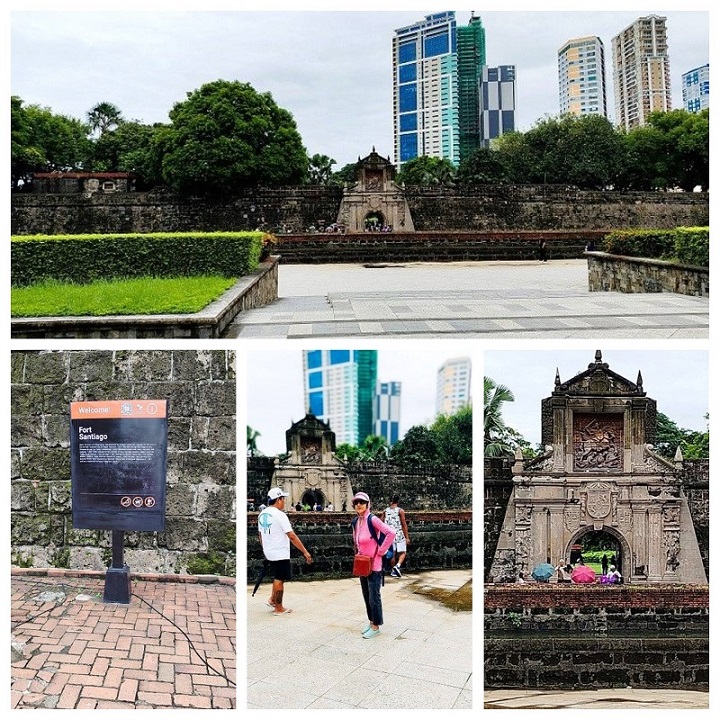
Named after Spanish Governor General Domingo Moriones, this plaza was used as a public promenade until the 1863 earthquake destroyed Fort Santiago. The buildings surrounding the plaza were used as soldiers’ barracks. The plaza was re-landscaped by the Tourism Infrastructure of Manila.
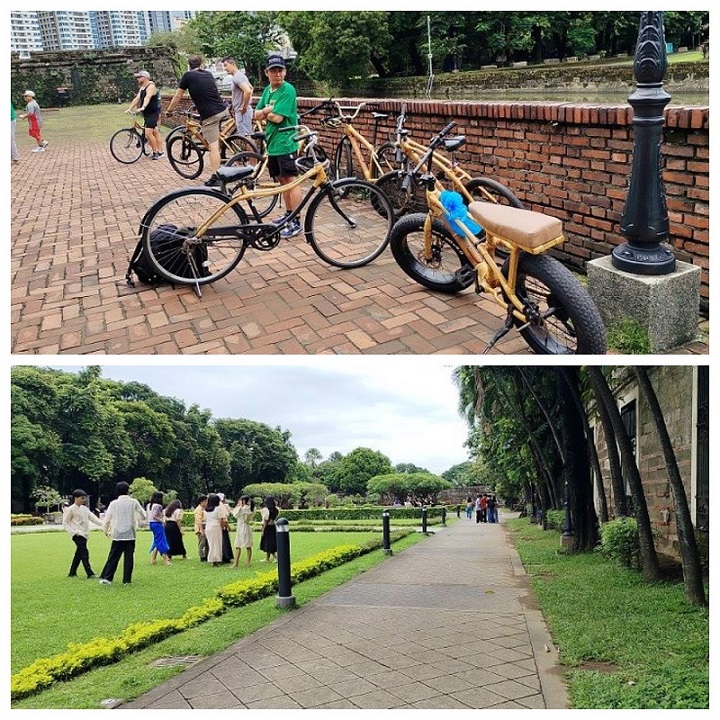
At the center of Fort Santiago is the Plaza de Armas. The plaza and its name is a common feature in fortresses built by the Spaniards in their colonies throughout the world. It got its name from the use of the area to stock arms and rifles when not in use. This is also where the soldiers marched around in their daily drills.
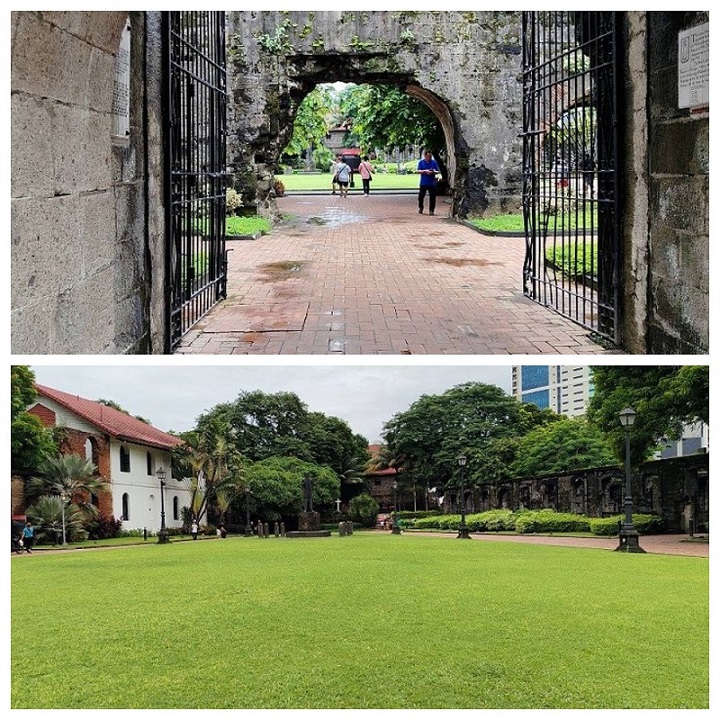
Rajah Soliman Theatre was formerly the Infantry Quarters of Fort Santiago, but destroyed during the Battle of Manila in 1945. It was renovated in 1967 by National Artist for Architecture, Leandro Locsin and turned into an open air theater.
The structure of San Franciso Javier was built in 1773.
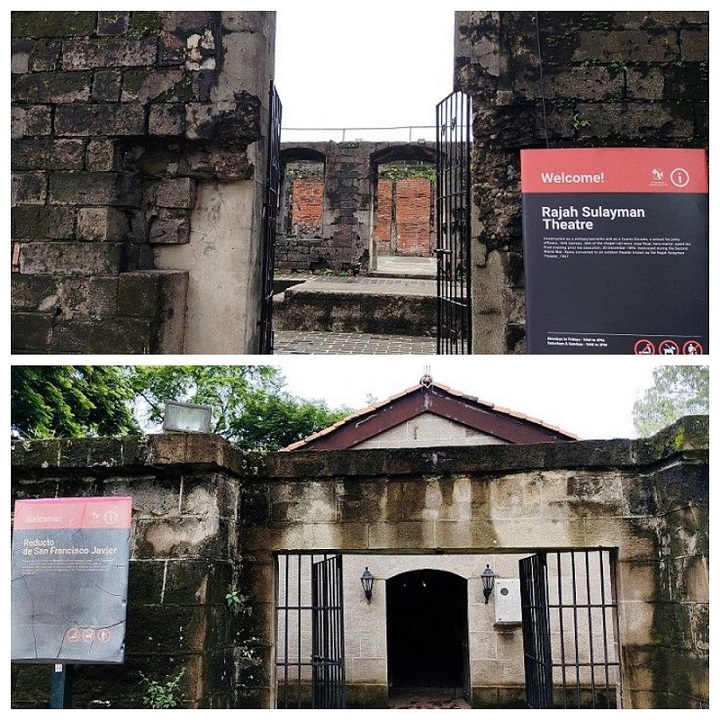
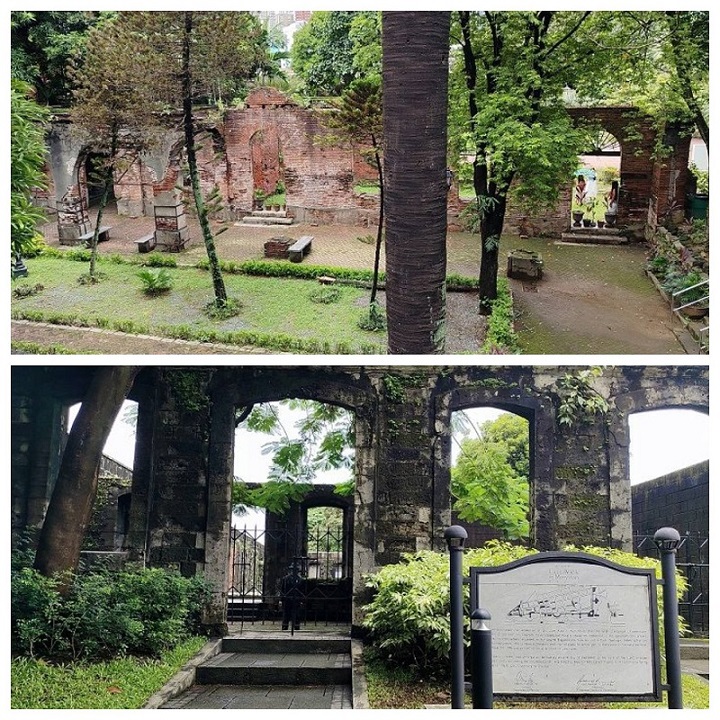
Alongside the solid curtain wall of Baluartillo de San Francisco Javier are the ruins of American Barracks. Former Philippine President Elpidio Quirino was imprisoned in this building for 16 days in 1943, during the Japanese Occupation. The ruins underwent retrofitting in 2017, and is used today as an open-air exhibition space.
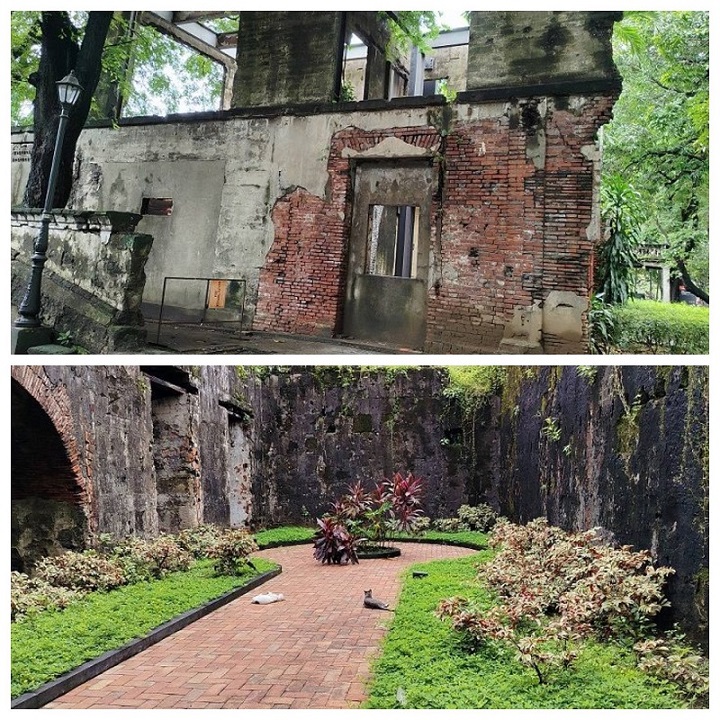
Ruins of Spanish colonial era brick barracks.
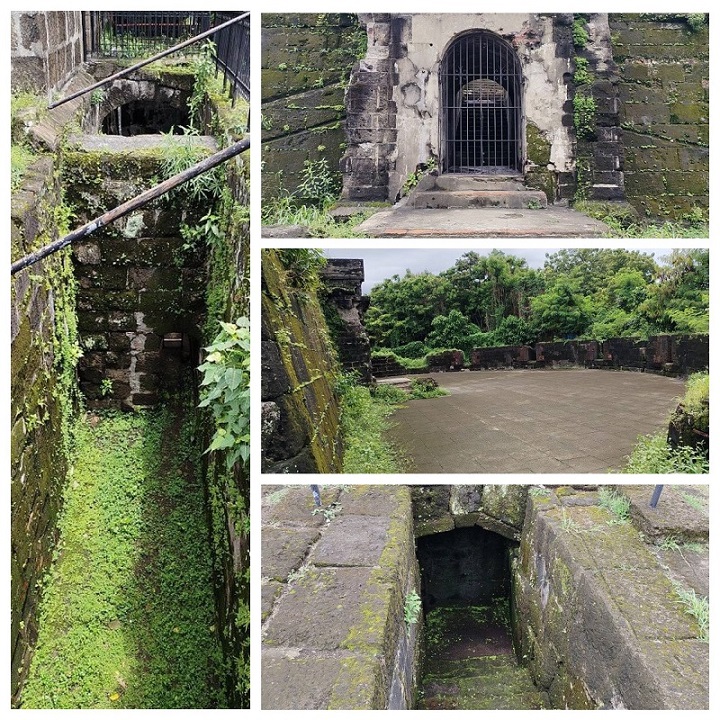
Remnants of underground prison cells, tunnels.
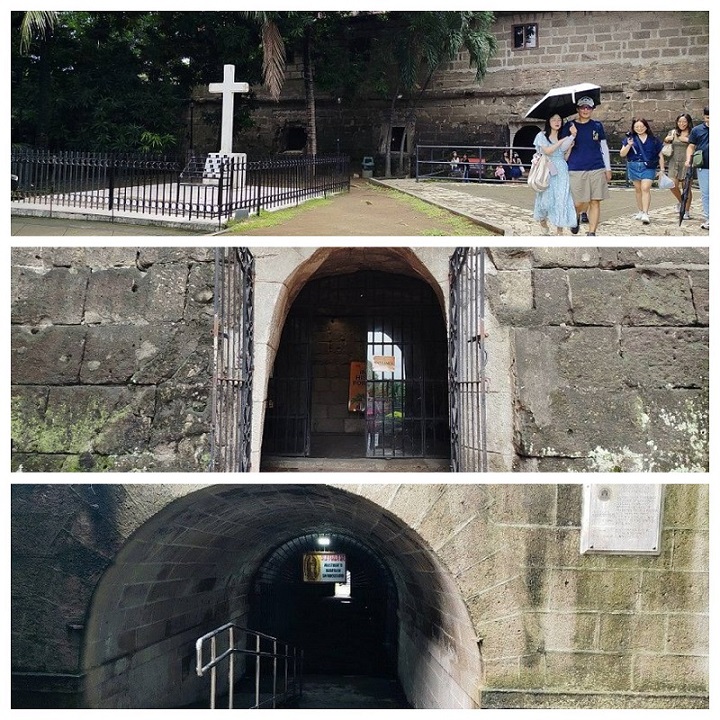
After the Battle of Manila in 1945 hundreds of decomposing bodies were found. Their remains lie in a mass grave under a white marble cross beside the Dungeons.
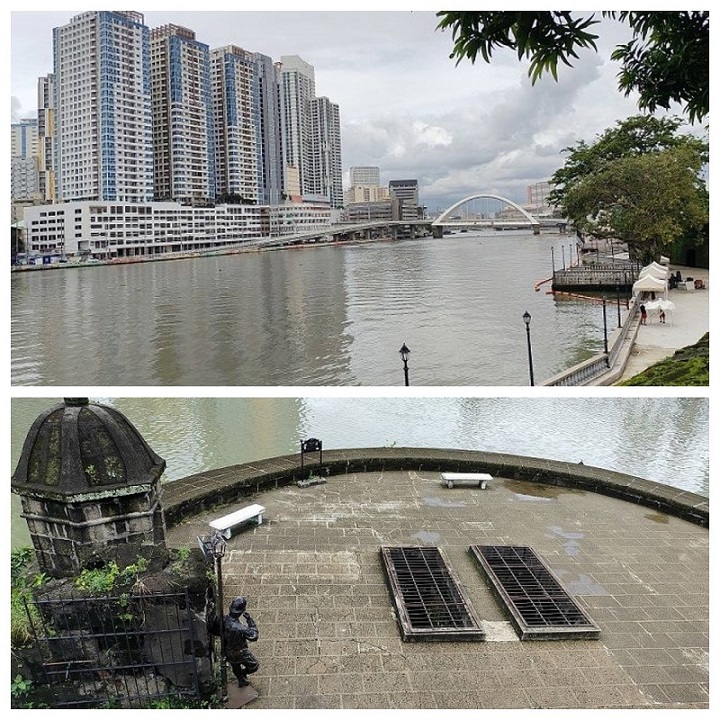
Solid defensive wall of Fort Santiago overlooking Pasig river.
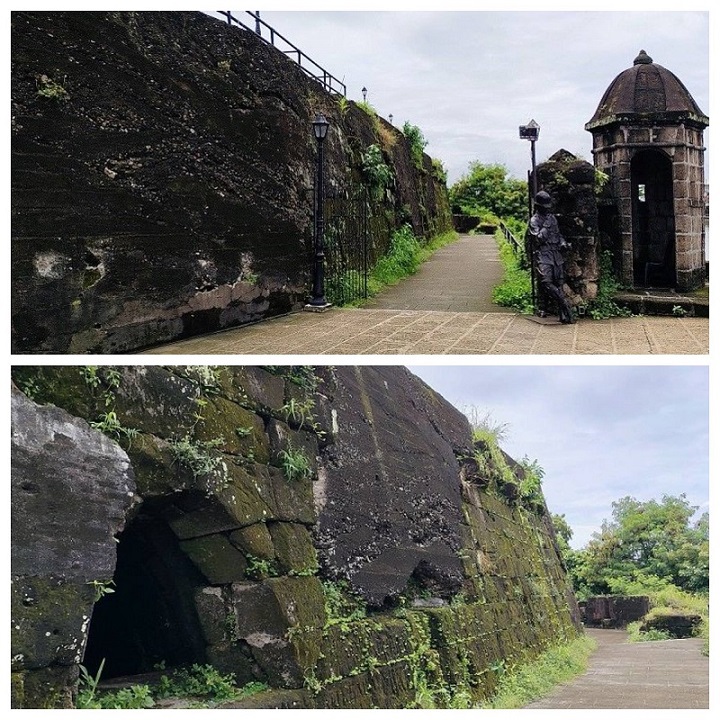
Falsabraga Media Naranja offers beautiful panorama of Pasig river. Falsabraga means false wall owing to the fact that it is lower than the main wall, an added protective layer of stone wall from heavy bombardment. It is shaped like half of an orange thus named Media Naranja.
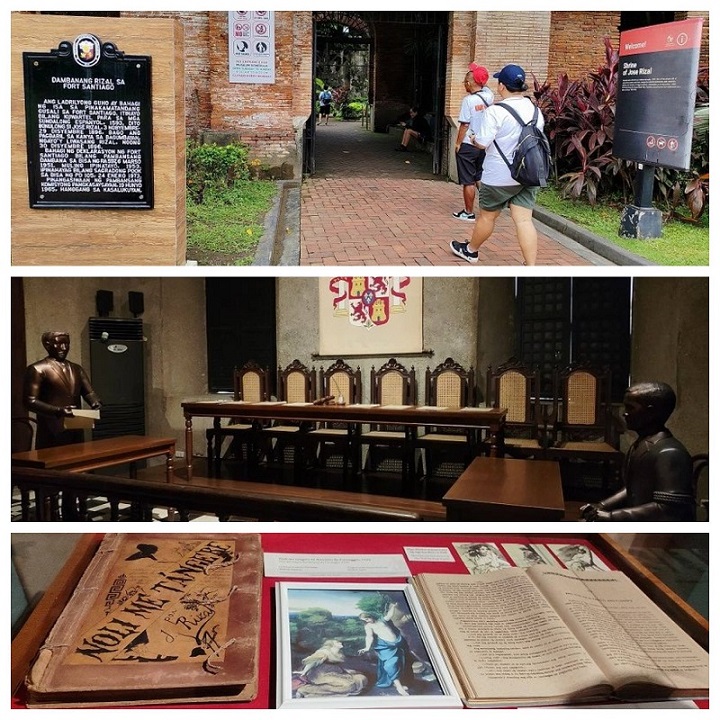
Jose Rizal museum within Fort Santiago.
Jose Rizal museum in Fort Santiago reaffirms Rizal’s significance in Philippine history. His death served as the inspiration in the struggle for Philippine independence. This brick barracks built in the 16th century, has been in a ruined state since its destruction during the Battle of Manila in 1945. Here Jose Rizal was imprisoned for 56 days, from November 3 to December 29, 1896. The entire right wing of this building which contained his prison cell was reconstructed in 1953 as a museum and as a shrine dedicated to Jose Rizal.
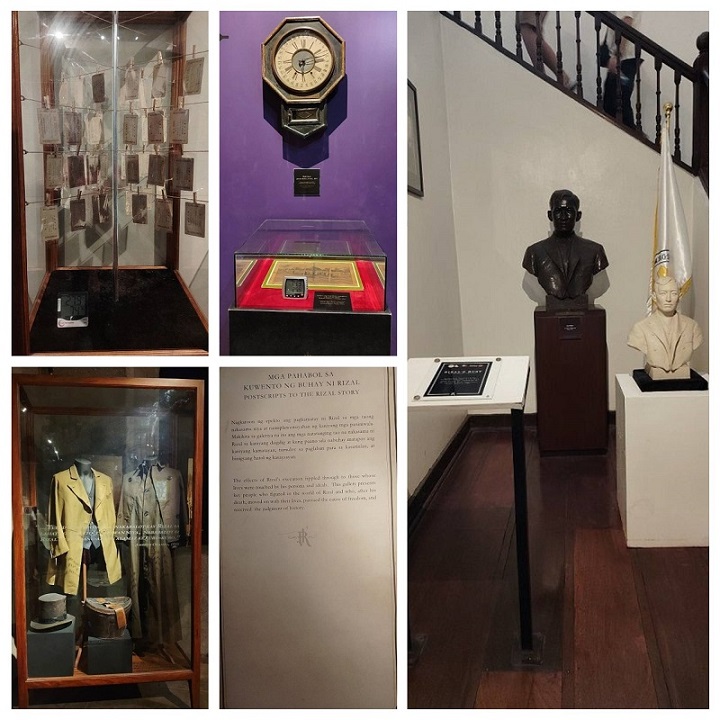
Personal belongings of Jose Rizal.
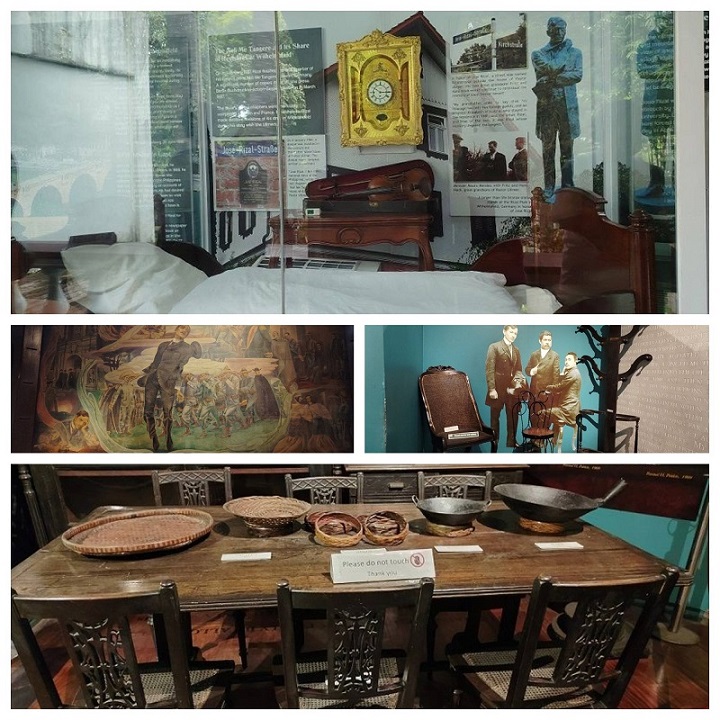
Jose Rizal moments.
Close to the ruins of Spanish era brick barracks there is the chapel cell where Jose Rizal was transferred after 56 days of imprisonment.
During World War II, Fort Santiago was severely damaged when American forces blasted their way inside to flush out the Japanese who sought refuge in the fort and refusing to give up the fight. The main gate was destroyed, and the only remnants of the original structure are the two carved stone sentries on its sides.
Though cycle tours are very popular to explore Fort Santiago but my preferred mode is walking and that’s what I did to feel the Shrine of Freedom.
I would also opt to walk the shrine rather than tour it by bike. I like to take my time!
Walk gives an opportunity to feel things closely.
The ruins are gorgeous wow…I would love to explore the whole town and of course the ruins, that would be amazing.
Ruins of the fort narrate the history of the place.
I love this post and enjoyed checking out all of the incredible pictures. It looks like it was an incredible trip and this place is rich in history which I always love. I am a history buff and appreciate you sharing this one!
A trip rich in history, absolutely.
Beautifully captured! I love how you highlighted both the deep history and the human stories behind Fort Santiago. It’s such an important reminder of the resilience and sacrifices of the Filipino people x
Thnaks. Visiting Fort Santiago was indeed an enriching experience.
It is so neat to see such historical places, and be able to understand how they’ve changed over time. I bet it was really interesting walking around areas that the military use to do their drills.
Indeed enhance our understanding of the place.
What beautiful pictures of the shrine. I love to walk areas like this.
Walking is the best mode to experience closely and deeply.